How Dubai Property Valuations Work: What Determines Your Home's Worth
Your property's market value is not a guess. It is driven by measurable factors: location, floor level, view, built-up area, comparable sales, and DLD transaction records. Here is exactly how professional valuations work in Dubai.

Why Valuations Matter for Dubai Property Owners
If you own property in Dubai, knowing its current market value is not optional. It is the foundation for every financial decision you make about that asset. Whether you are considering selling, refinancing with a bank, settling an estate, or simply tracking your net worth, an accurate valuation determines your next move.
The mistake many owners make is relying on asking prices from property portals. Asking prices are what sellers hope to get. They are not what properties actually transact for. The gap between listed price and actual sale price in Dubai can be 5-15% or more, depending on the community and market conditions. A proper valuation uses actual transaction data, not wishful listings.
Location and Community Premiums
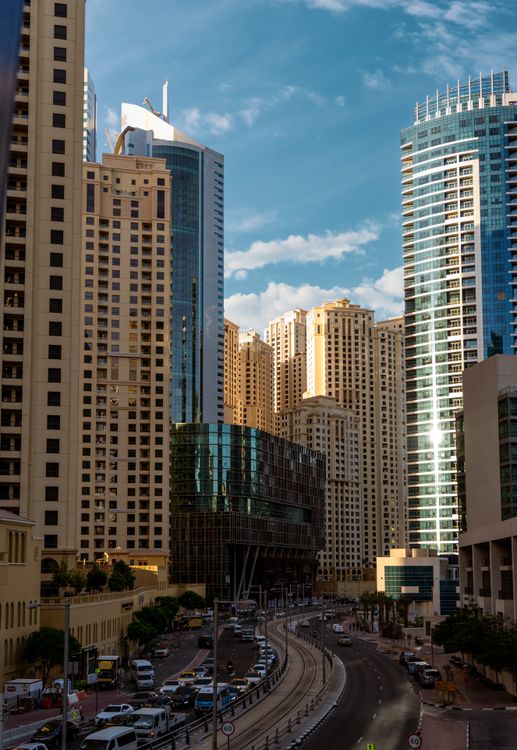
Location is the single largest factor in your property's value, but it operates on multiple levels. The community itself sets a baseline. A one-bedroom in Dubai Marina commands a fundamentally different price than a one-bedroom in Dubai South, even if they have identical square footage.
Within a community, the specific building matters. Two towers in the same community can have 10-20% price differences based on developer reputation, build quality, age, amenity offering, and management standards. Within a building, position matters: corner units, units facing the pool or park, and units away from traffic noise all carry premiums.
Dubai's freehold communities are also stratified by maturity. Established areas like Dubai Marina, Downtown, and Palm Jumeirah have deeper transaction histories and more predictable valuations. Newer communities like Dubai South or Damac Hills 2 have less data, which introduces more variance in estimates.
Floor Level and View Impact
In Dubai's tower-dominated landscape, floor level has a measurable impact on value. Higher floors command premiums for several reasons: better views, less noise, and perceived prestige. The premium is not linear though. The jump from floor 5 to floor 15 typically adds more value per floor than the jump from floor 35 to floor 45.
View type is equally significant. A sea-facing unit on floor 20 will be worth substantially more than a construction-site-facing unit on the same floor. Common view categories in Dubai include sea view, Burj Khalifa or Downtown view, marina view, golf course view, park or community view, and city view. Each carries a different premium depending on the community. In Dubai Marina, a full marina view can add 15-25% over a city-facing unit. On Palm Jumeirah, Atlantis-facing units command premiums over trunk-facing ones.
Built-Up Area and Layout Efficiency
The built-up area (BUA) as stated on your title deed is a core valuation input. Price per square foot is one of the primary metrics used in Dubai property transactions. However, BUA alone does not tell the full story.
Layout efficiency matters. Two apartments with identical BUA can have very different usable space depending on how the floor plan allocates area to corridors, balconies, and common walls. A well-designed 750 sq ft apartment with an efficient layout can feel significantly larger than a poorly designed 800 sq ft unit.
Balcony size is particularly relevant in Dubai. Some buildings include large balconies in the BUA calculation, which inflates the number without adding proportional livable space. Experienced valuers account for this by examining the actual internal layout alongside the title deed BUA.
Comparable Sales: The DLD Transaction Record
The Dubai Land Department (DLD) records every property transaction in the emirate. This data forms the backbone of accurate valuations. When a professional values your property, they pull recent sales of similar units in your building or comparable buildings nearby.
They look for transactions matching your property type, size, floor range, and view. The more recent and closely matched the comparables, the more reliable the valuation. If three identical-layout units on similar floors in your building sold in the last 90 days, you have a high-confidence data point. If the last comparable sale was 8 months ago, adjustments are needed for market movement in the interim.
This is why owner-supplied details matter. When you provide your exact unit number, building name, BUA, and floor, the valuation engine can match against the most relevant DLD records rather than relying on community-wide averages that might not reflect your specific unit's positioning.
Market Conditions and Timing
Dubai's property market moves in cycles. Valuations are snapshots of a specific moment. The same property can be worth 10-15% more or less within a single year depending on market momentum, transaction volume, and broader economic conditions.
Key market indicators that affect your valuation include: the volume of transactions in your community over the last 3-6 months, the direction of price movement (trending up, flat, or correcting), new supply entering the market from off-plan projects reaching completion, and seasonal patterns where Q1 and Q4 typically see higher activity than summer months.
An accurate valuation accounts for where we are in the cycle, not just historical averages. This is why real-time data matters more than a report from six months ago.
Getting an Accurate Valuation for Your Property
The more precise data you provide, the more accurate your valuation will be. At minimum, a reliable valuation requires your community and building name, unit number as per your title deed, built-up area, property type and bedroom count, floor number, and view description.
Optional details that improve accuracy include condition of the property, furnishing status, any upgrades or renovations completed, and whether the unit is currently tenanted or vacant.
Portal listings and neighbor opinions are not substitutes for data-driven valuations. If you are making a financial decision about your property, whether selling, holding, or refinancing, start with the actual numbers.
Know What Your Property Is Worth
Get a free, data-backed valuation of your Dubai property backed by real-time market data and DLD records.
Get Free ValuationNo credit card required • Takes less than 5 minutes • 100% Free
Continue Reading
More insights for Dubai property owners